
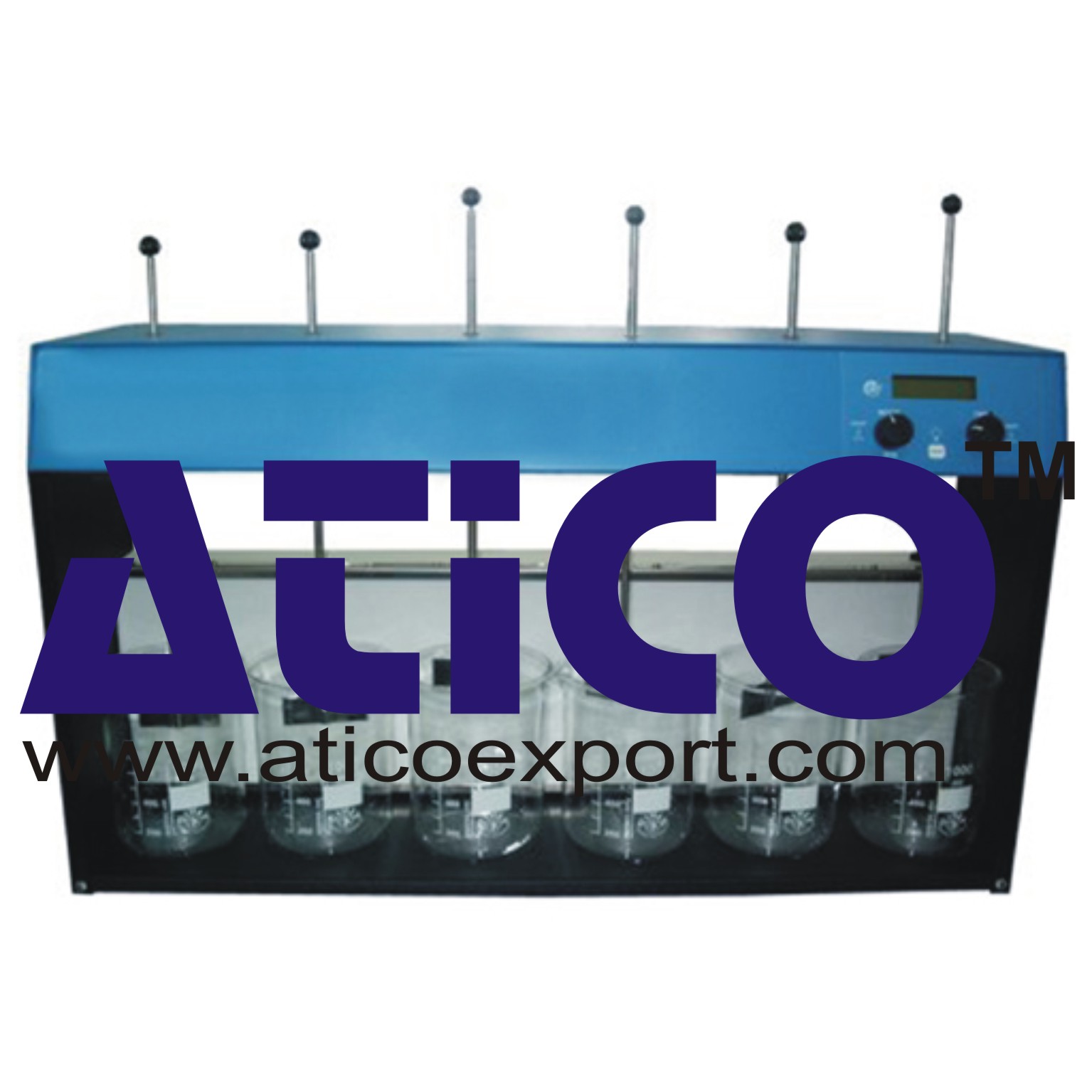
Flocculation Test Unit
Categories: Technical Educational Equipment
Product Code: AEEB005



About this product
Flocculation Test Unit
It is used to conduct to conduct the flocculation test in the laboratory. This test is also known as “Jar Test”. It consists of 6 Nos. of Glass Flocculating vessels. These are situated on translucent base and lightened from the bottom by a florescent lamp.Specification:
- A bench top unit comprising an internally illuminated base and a backboard supporting a control console.
- Six stirrers with stainless steel paddle shafts and blades linked to a variable speed motor.
- Stirrer speed range typically 25-240 rpm.
- Stirrer assemblies are easily demounted to allow the test vessels to be removed and cleaned.
- Digital timer 1-99 minutes.
- Two adjustable pre-set programs.
Capabilities:
- Determination of optimum coagulant dosage
- Determination of optimum pH
- Effect of mixing time and intensity on aggregation
- Coagulation tests in conjunction with activated carbon.
Description:
Analysis of a water or waste preparatory to the design of a treatment sequence often involves coagulation and flocculation tests, 'Jar tests', in the laboratory. Jar tests are routinely used for the control of plan operations and are performed by treatment plant operators.
The tests serve to indicate the optimum chemical dosages for removal of turbidity and colour, including such parameters as pH adjustment, and the supplemental use of activated carbon. Jar tests, furthermore, yield a wealth of qualitative information on the rate of agglomeration as a function of energy input (paddle speed), the settleability of the floc formed, the clarity of the supernatant water (which might be related to the subsequent length of filter run).
Coagulation and flocculation tests may be used, in conjunction with other tests, to study basic processes including, for example, the kinetics of reaction and the removal of trace constituents from aqueous solution.
A bench-mounted framework incorporates facilities for six tests to be carried out simultaneously. The glass flocculating vessels stand on a translucent base which is illuminated from below. Each flocculating vessel incorporates a stirrer paddle driven by a variable speed drive. The paddle assemblies are easily withdrawn for removal and cleaning of the test vessels.
The paddle shafts are made of stainless steel to resist corrosion. Paddle speed is accurately maintained by electronic feedback control. A digital display clearly indicates the speed which is fully variable. Alternatively, the use of two adjustable presets allows repetition of pre-selected speeds.
A digital timer can be set to count down from 1 to 99 minutes. After count down the paddles stop and an alert sounds.
Technical Details:
- Dimensions of paddle blade: 50mm x 15mm
- Stirrer speed range: 25-240rpm (approx.)
- Sample volume: 1 litre (each vessel)
Related Products
Wireless Network Coordinator Trainer
Features of Wireless Network Coordinator Trainer: Wireless Sensor Networking Developmen...
AC Position Control System Using PID
AC Position Control System Using PID Features of AC Position Control System Using PID O...
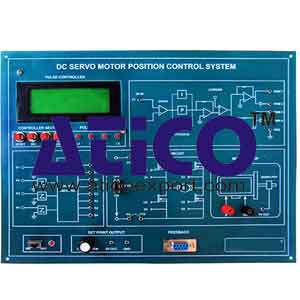
DC Position Control System Using PID
DC Position Control System Using PID Features of DC Position Control System Using PID 4...
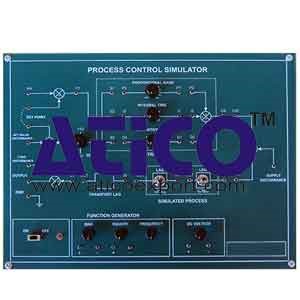
Process Control Simulator
Process Control Simulator Features Built-in Function generator (Sine & Square wave)...
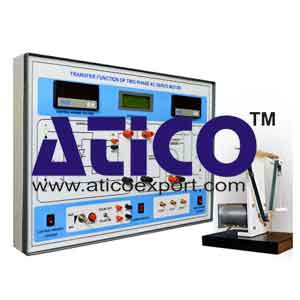
Transfer Function of AC Servo Motor
Transfer Function of AC Servo Motor Atico Export is the best Transfer Function of AC Servo...
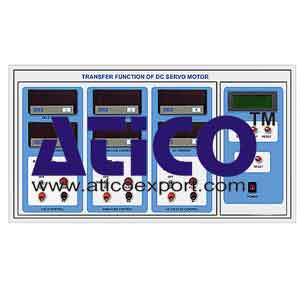
Transfer Function of DC Servo Motor
Transfer Function of DC Servo Motor Features of Transfer Function of DC Servo Motor On...
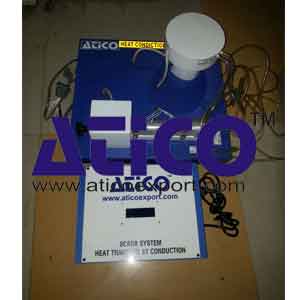
Scada System Heat Transfer Lab
Scada System Heat Transfer Lab Technical Description In Scada System Heat Transfer Lab, th...
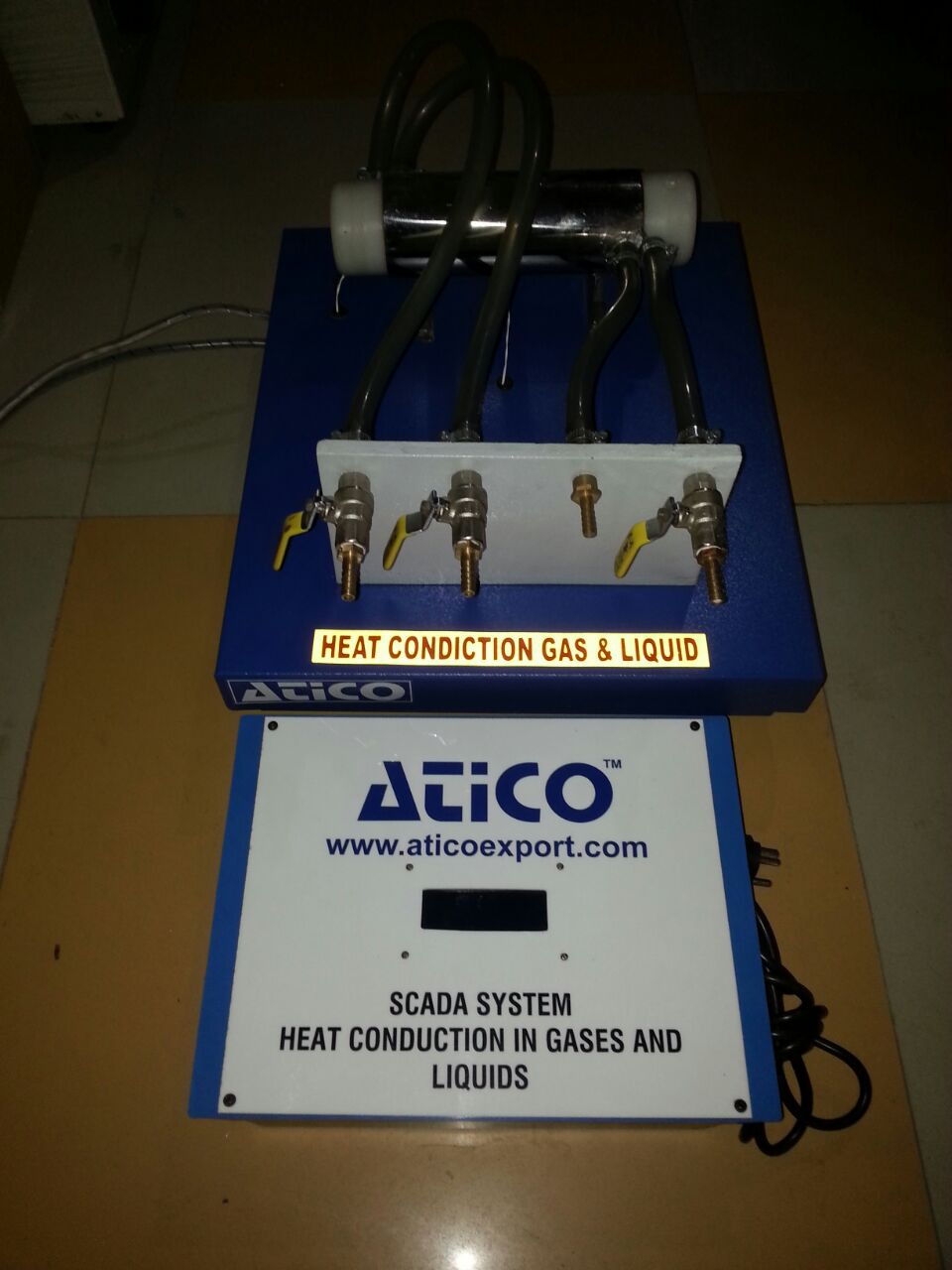
Scada System Heat Conduction in Gases and Liquid
Scada System Heat Conduction in Gases and Liquid Technical Description Scada System Heat...