
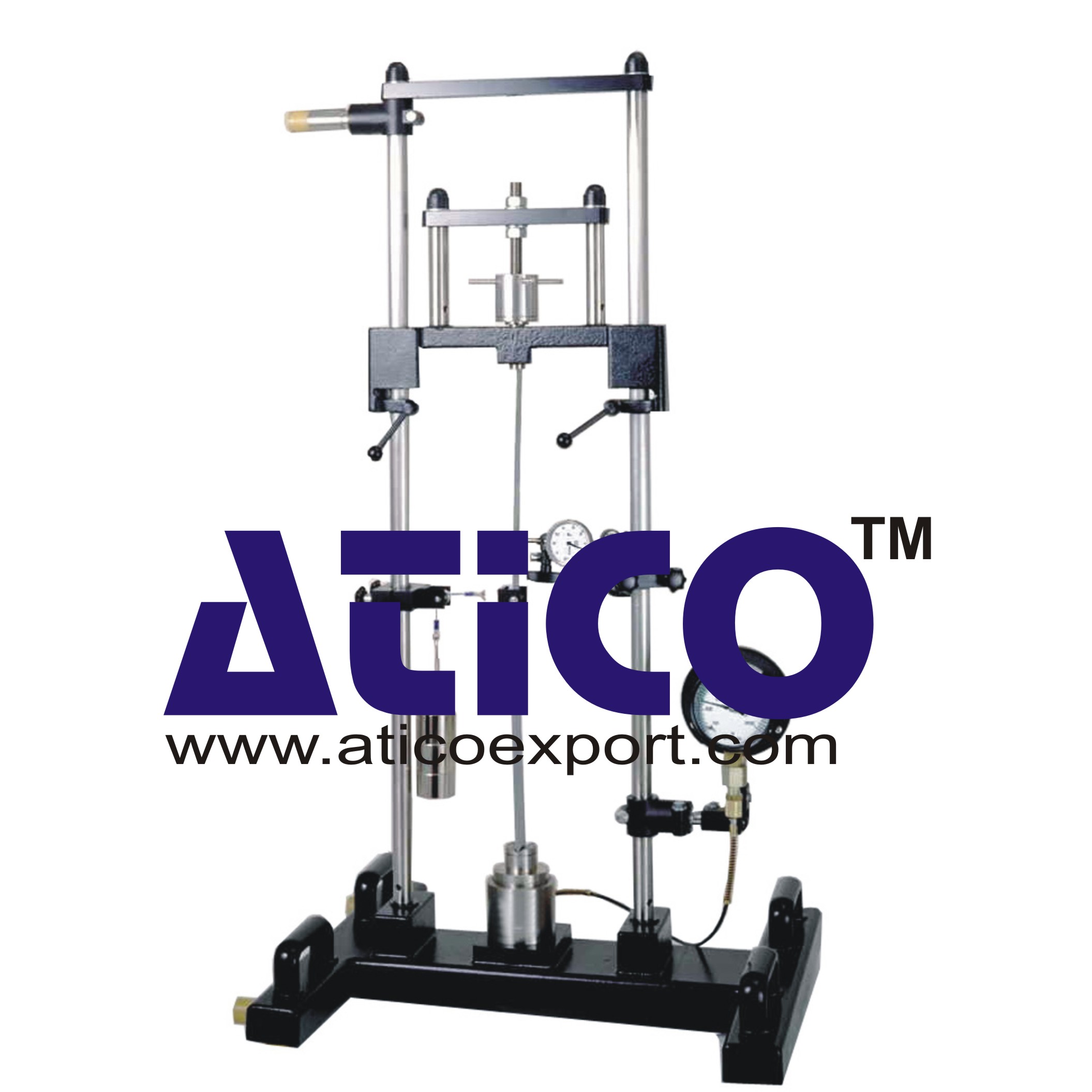
Buckling Behaviour of Bars
Categories: Lab Equipment
Product Code: ASLE061




About this product
Buckling Behaviour of Bars
Technical Description:
In technical mechanics, loss of stability is known as buckling. Under the effects of compressive forces, and under increasing load, the axis of the bar deflects laterally until it suddenly and violently fails (collapses), even before the fracture point is reached. The stresses in the bar often remain within the elastic range during this process. Investigates the buckling behaviour of bars under various influences. All relevant buckling problems are demonstrated by way of experimentation. For the purpose, one end of a bar is fixed or pinned, depending on the buckling case. A height-adjustable load-carrying cross-arm and a hand-operated spindle are used to apply compressive force to the bar. An axial bearing between the spindle and the bar support prevents torsional loading of the test bar. A hydraulic load cell measures the applied force and indicates it on a pressure gauge. The lateral deflection of the bar is indicated on a dial gauge. Experiments demonstrate various influences, such as bar lengths, materials and methods of support. A transverse load application device can be used to generate additional shear forces on the test bar. The experimental unit can be operated vertically or horizontally. The load gauge can be rotated 90° to adjust to the chosen option. The various elements of the experiment are clearly laid-out and housed securely in a storage system.
Specification:
1. Investigation and testing of all relevant buckling cases 2. Verification of the Euler Theory of buckling 3. Experiments in horizontal or vertical orientation 4. Test bars in various lengths and materials 5. Test bar ends pinned or fixed 6. Spindle to apply forces 7. Transverse load application device generates shear forces 8. Force measurement using a hydraulic load cell 9. Measurement of lateral deflection by dial gauge 10. Storage system to house the componentsTechnical Data:
Test bars
- quantity: 11 - bar length: 350...700mm (max.) - materials: aluminium, copper, brass, steel, GRP
- cross-sections: 10x4mm, 25x6mm, 25x10mm
Load application spindle
- force: max. 2000N - stroke: max. 10mm Lateral deflection: max. 20mm Specimen holder bore: d=20mm
Measuring ranges
- force: 0...2500N, graduations: 50N - deflection: 0...20mm, graduations: 0,01mm Set of weights for transverse load: max. 20N - 3x 5N, 1x 5N (hanger)
Related Products

HPLC
Atico India is a leading HPLC manufacturer, providing high-quality High Performance Liquid...
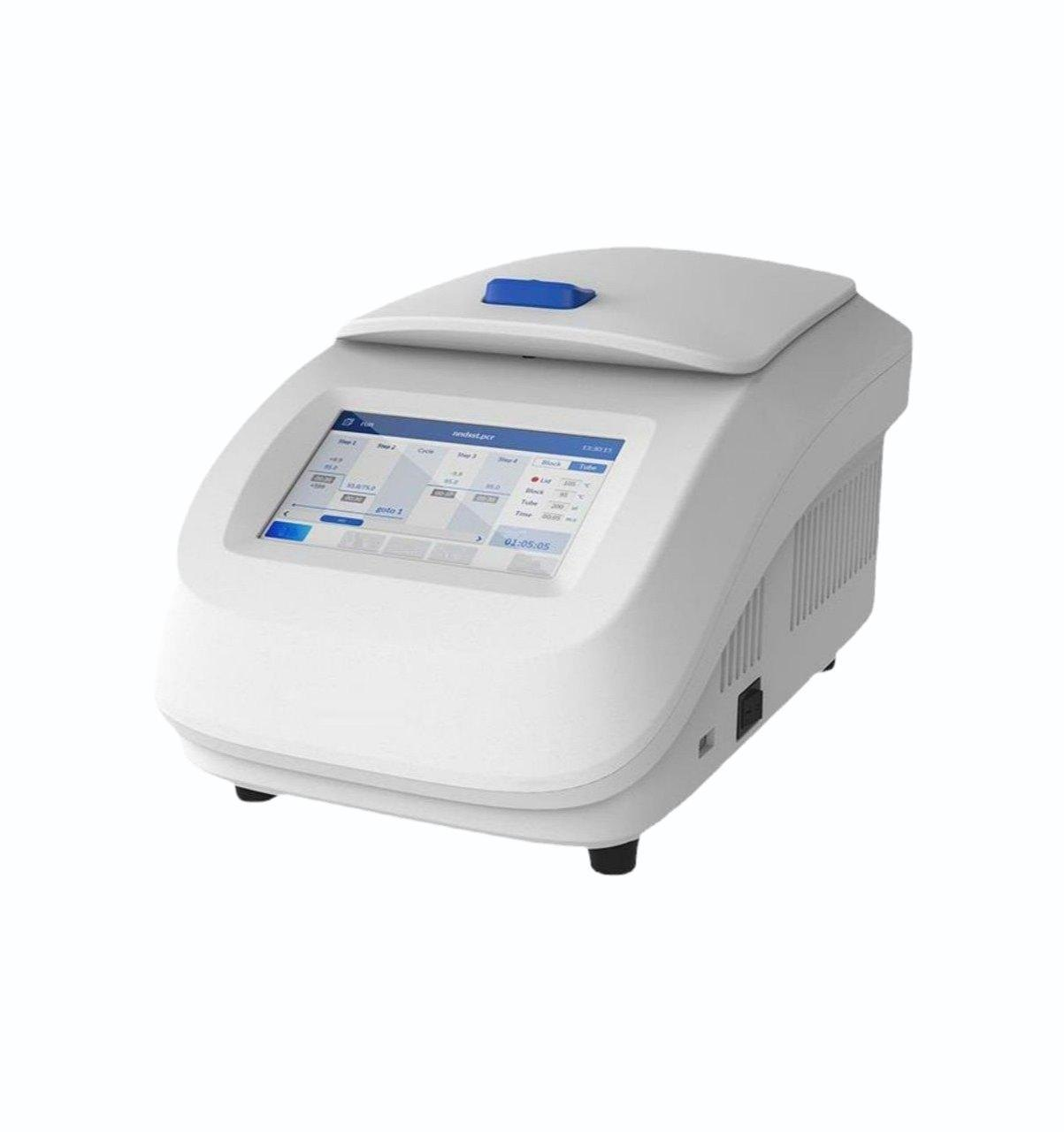
PCR Thermal Cycler
Welcome the world of molecular biology with a PCR thermal cycler from the top PCR thermal...
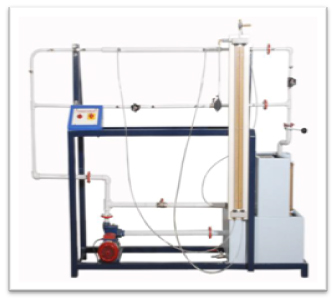
Friction Loss In Pipes And Fittings Apparatus
Description:- This equipment consists a set of 5 variable-sized PVC pipes manifolded and...
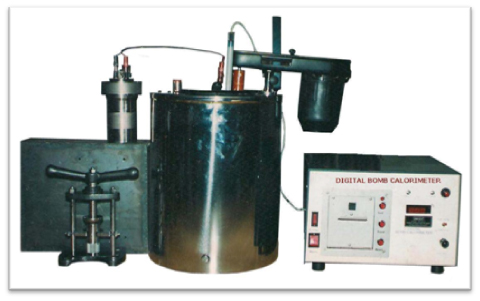
Bomb Calorimeter
Measuring the heat of combustion requires robust equipment. Before the 1800s, the need for...
Hamburg Wheel-Tracking Tester
The Hamburg Wheel-Tracking Tester is used to test submerged, compacted Hot Mix or Warm Mix...
Dynamic Loading System
Dynamic Loading System was designed and developed for the investigation of masonry wall be...
Automatic Marshall Compactor With Rotating Base
Humboldt Automatic Marshall Compactor With Rotating Base machine are designed to provide s...
Asphalt Coring Machine
The Laboratory Asphalt Coring Machine is capable of achieving a large range of spindle spe...